


Last issue we recommended Karl Polanyi as a guide for this year, especially for his concept of the “double movement”, referring to the way society pushes back politically when the free market has unbalanced the economy in various dangerous ways. We know how this works from the long and often hidden history in this country of mutual aid and cooperativism in the Black community.
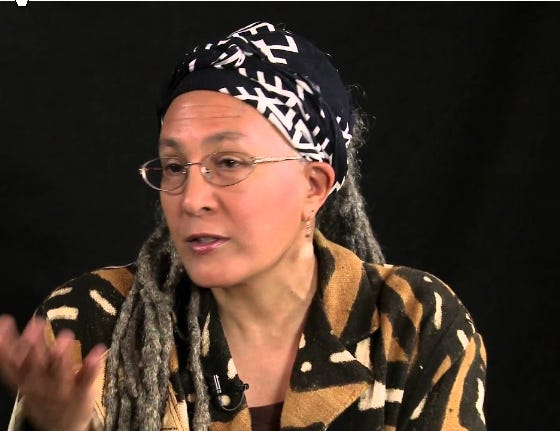
With the 2014 publication of her landmark study, Collective Courage, Dr. Jessica Gordon Nembhard made available to us today an inspiring legacy. Going back to the abolition-driven utopian communities whose members included Frederick Douglass and Sojourner Truth down to Cooperation Jackson today, Dr. Nembhard showed that cooperative economic thought was “integral to most of the major African-American leaders, thinkers and organizations of the last two centuries”. She notes that, amazingly, almost all Black people since the mid-19th century were involved in co-ops in some manner, a strategy to “cooperate our way out of poverty”.
In the early twentieth century, W.E.B. DuBois, mindful of the relatively recent example of the hundreds of co-ops formed by the one million members of the Knights of Labor, wrote about and even taught cooperativism. But Marcus Garvey, Booker T. Washington and others also took up this strategy, one which Nembhard shows had to be hidden during these violent years of the resurgent KKK and Jim Crow oppression.
With the establishment in 1930 of George Schuyler’s Young Negroes’ Co-operative League, notably directed by a young Ella Jo Baker, the co-op movement struck deeper Southern roots, laying a social foundation (along with the Black churches) for the first stirrings of the civil rights movement. Ag marketing and supply co-ops also took hold, along with initiatives like Fannie Lou Hamer’s Freedom Farm.
With the support of CORE, SNCC, and the Southern Christian Leadership Council, the Federation of Southern Cooperatives, a coalition of 22 Black co-ops founded in Atlanta in 1967, began promoting cooperative economic development as a strategy and a philosophy. Their vision was to sustain Black farmer ownership and control over land, helping create or support more than 200 co-ops and credit unions in their first 25 years. Born out of resistance, the FSC is still very in operation today.
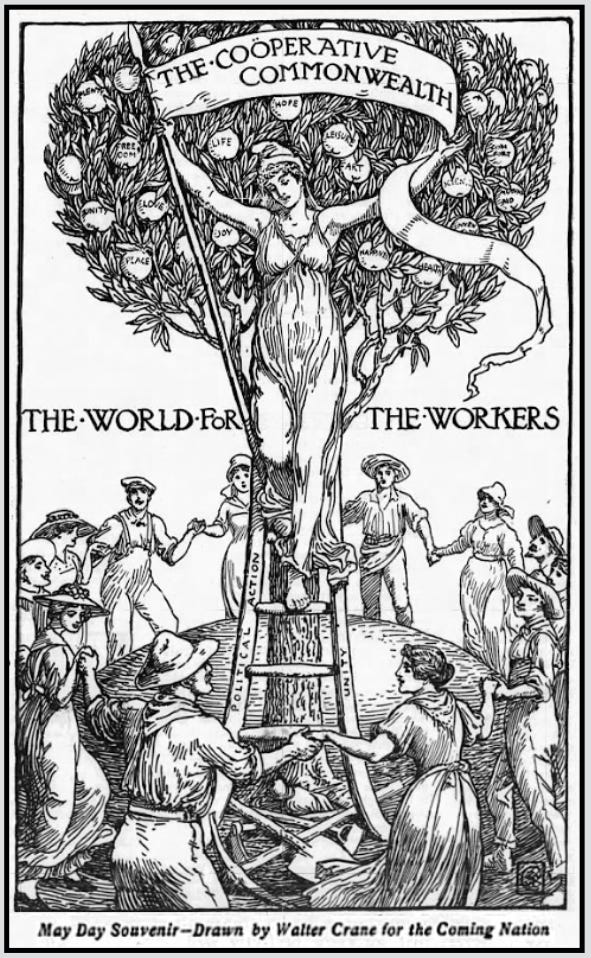
Another important contribution from Dr. Nembhard is her framework called the Cooperative Commonwealth, which you could call a blueprint for an industrial policy from the bottom up.
This national-scale solidarity system is comprised of interlocking cooperative ownership structures in all industries and sectors of the economy, with linked supply chains, shared funding, and more.
This new national-level framework brings joint ownership and democratic control to three categories of cooperative entities: 1) consumer-owned; 2) producer-owned; 3) worker-owned. Interestingly, Nembhard points out that bartering, gifting and fair trade practices can and should all also be incorporated into the commonwealth.
What this visionary proposal offers is a non-hierarchical, non-exploitative set of practices geared toward the grassroots level, utilizing the concept of “shared surplus” as a different way of understanding conventional profit.
The system also incorporates concepts such as wage solidarity (meaning a highest-to-lowest differential of perhaps a maximum of 6:1), the goal of a living wage, profit sharing (if not actual ownership), affordable housing, and free higher education, all of which are elements found today in other, more equitable societies.
Other important elements of this framework:
financial reforms such as the development of public banking, deployment of wealth taxes, and the widening of credit union mission in order to foster co-op development via R&D funding;
a simple process to convert existing businesses (especially those in the “silver tsunami” category) to the co-op form;
a push for more business sector associations affiliated regional/national/international co-op federations;
no national ownership except for public banks and utilities;
no excess wealth allowed in this system—no excessive interest or rents could be charged;
a majority of enterprises of 1,000 employees or less
a goal of a 20-hour work week with full benefits (“work” to include public work, community organizing, and “invisible” labor such as caregiving, etc.);
decentralized planning and coordinated planning, with primary focus at the local level.
This proposal shifts many things. Instead of capital “renting” labor, we find labor renting capital. There’s also an important emphasis on popular education focused on how we run enterprises democratically. And there’s the proposed elimination of debt peonage, a condition which blocks economic participation for many today by leaving people with low wealth and in poverty.
Practicing economic democracy, Nembhard is also arguing, builds democratic expectations and practices in other areas. In fact, there is no true democracy, as she notes, without economic democracy.
And more broadly, a genuine commonwealth is on which gives people time for caregiving, volunteering, and continuous learning. Is this not the future we want to be building in 2024?
See you next time—peace.
So cool, we don't have to re-invent the wheel. Our ancestors had made it work back in the day. Wisdom traditions are real and not necessarily very far off. Let's commonly collect our cooperative practices for the last straightaway of civilisation.