


I decided a little over a year ago to relocate from South Bend to Washington D.C., where I have a daughter living and a number of good friends. Knowing nothing about D.C. neighborhoods, I landed almost at random on Capitol Hill, literally three blocks from the east door of the U.S. Capitol Building. Government monuments aside, this historic neighborhood of townhomes and parks is the most beautiful place I’ve ever lived.
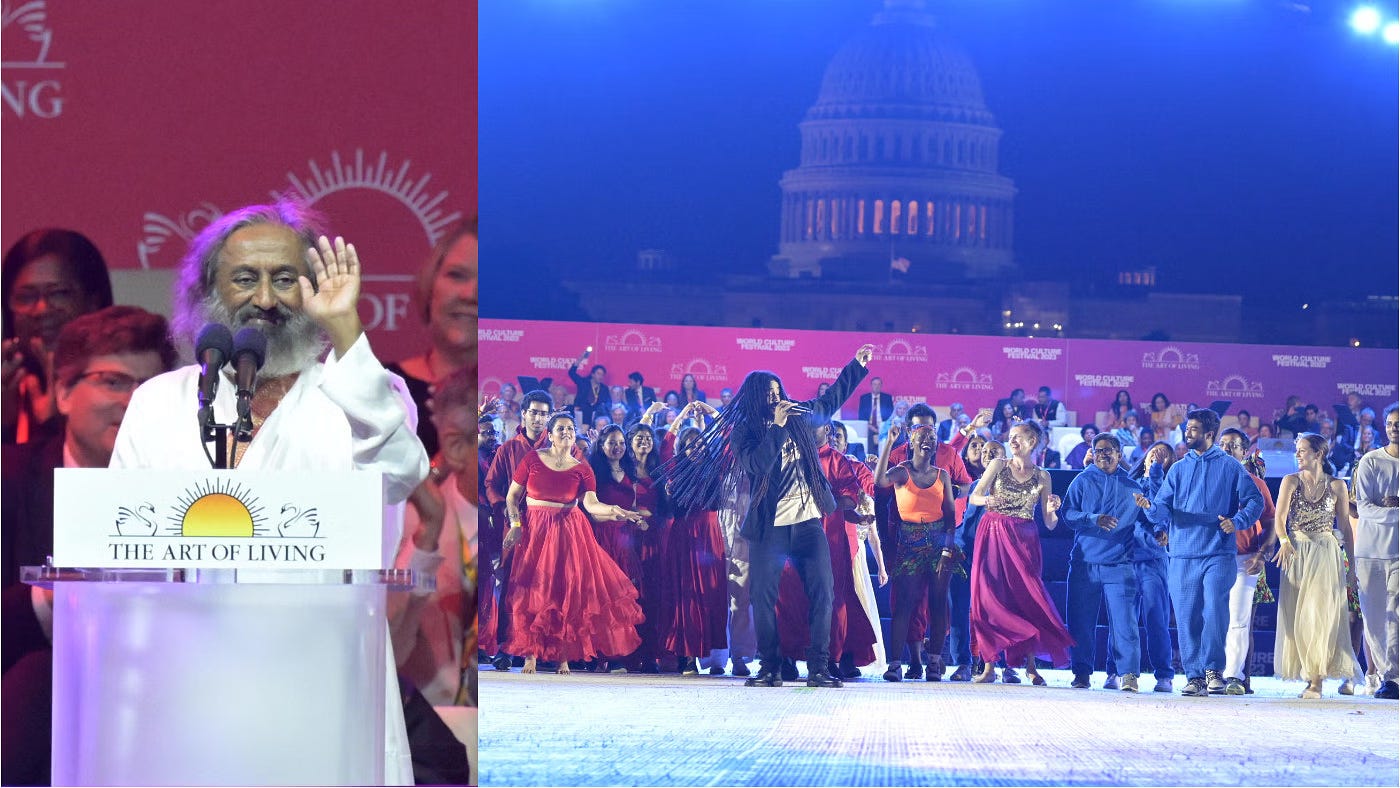
Last weekend I walked down to the National Mall to catch the World Culture Festival, a three-day event comprising a “cultural extravaganza, global music, food, and meditation.” The organizer, the Art of Living Foundation, was expecting 150,000 people to attend—its 2016 event in New Delhi, by comparison, turned out an estimated 3.75 million.
The festival setup included 20 jumbotrons, 30 tents, and lots of projection screens along the Mall. Over 50 heads of state, members of parliament, and U.N. delegates were scheduled to speak. A 1,000-member gospel choir and some 2,800 dancers representing more than 35 countries performed.
The Art of Living Foundation was started up in 1981 by Indian yoga guru and spiritual leader Gurudev Ravi Shankar (not to be confused with the late musician who died in 2012). When younger, he was an associate of the Beatles’ meditation guru, Maharishi Mahesh Yogi. His educational and humanitarian organization now has centers in 180 countries, offering programs focused on stress alleviation and self-development through breathing techniques, meditation, and yoga.
The festival’s big events (which I had to skip) were in the evening, with a reported 17,000 musicians and artists from dozens of countries involved. Their theme song will give you a small taste of things.
Until the festival hit town, I was not aware of Gurudev Ravi Shankar whose latest book, The Journey Within (“Life’s Big Questions, Answered”), was an Amazon and Wall Street Journal #1 best seller for several weeks. I noticed boxes and boxes of his book available at the event.
His vision: “Unless we have a stress-free mind and a violence-free society, we cannot achieve world peace.” In a culture as fully (and almost invisibly) militarized as ours, I’m gratified to hear this emphasis on peace-building, of course—it’s a major component of his foundation’s work.
But where exactly, I found myself wondering, does “the journey within” lead us? We hear today of an epidemic of loneliness: is ever-greater inwardness a cure? And is this another case of cultural practices from the global South being repackaged for sale to anxious Western consumers?
My suspicions on this topic were heightened recently by Josh Shrei in a two-part episode of his fantastic podcast, The Emerald, called “The Revolution Will Not Be Psychologized”. The host, taking off from a New York Times article (“The Problem with Letting Therapy Speak Invade Everything”), goes on to cite how the traditional yogic process (familiar from his years of living in India) has been conflated with the psychological process. The practice of meditation, Shrei suggests, has suffered a similar fate.
More broadly, his guest in the second episode, the remarkable Nigerian philosopher Bayo Akomolafe, speaks persuasively of the need to “decenter Western psychology” altogether—a large subject, naturally, but an important one we’ll get back to here as well.
From what I’ve read, the Art of Living Foundation does some good work. And I’ve no doubt Gurudev Ravi Shankar’s book has benefitted many readers. It’s just that I suspect the journey within leads to an empty shrine, one at which we Americans insist on worshipping—each in our usual condition of aloneness. And powerlessness.
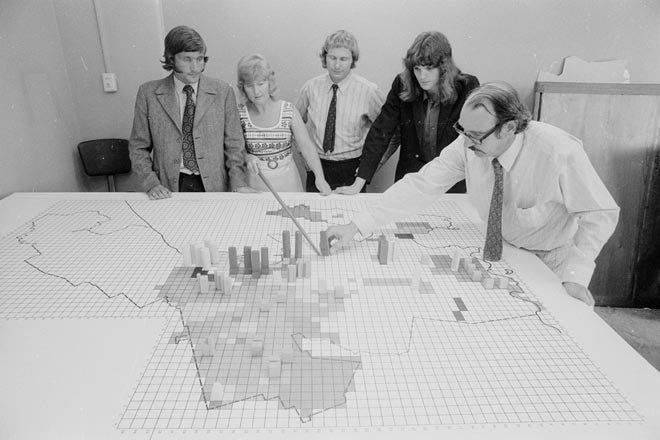
Living and working for quite a few years in Chicago, I got interested in strategies around community revitalization. About a decade ago, a friend recommended I look at the work of Strong Towns, now a non-profit media advocacy organization and a network of over 1,000 local urbanist activists interested in changing the ways their cities work.
This means they talk about walkability, density, traffic patterns, and even marching under the banner of No New Highways. (As Strong Towns puts it, referring especially to the destruction of highway-adjacent neighborhoods in the interests of “progress”, “Highways should build wealth, not destroy it.”)
From my perspective, I value the group for the way it has been part of a wider movement simply to democratize technical knowledge so as to empower average citizens. In the past, urban planners and city engineers could hide behind thickets of planning codes and legalities. Strong Towns’ response has been to recruit and inform Strong Citizens unafraid to go to public meetings and ask some tough questions.
Over the last decade, Strong Towns’ founder and thought leader, Chuck Marohn, has emerged not just as a “recovering [civil] engineer” but a notable critic of his own profession. He has articulated and publicized a critique of this country’s “growth Ponzi scheme” in which cities often accumulate huge postponed debt by building in misguided, unproductive ways.
Then there’s the ongoing Strong Towns campaigns for fiscal transparency in local governments, “safe and productive streets”, incremental-style development, and an end to parking mandates and subsidies.
I think part of what’s behind the group’s popular success (from a modest launch as a blog in 2008, Strong Town’s annual budget is now over $1 million, with a team of 20) is their insistent posture of non-partisanship. They are, after all, a 501c3 non-profit (no politicking) and they want to build as big a base as possible—which means as broad an appeal as possible.
Not that Strong Towns does not have principles—it does and those are necessarily grounded in various values. Which means they should be available for debate and discussion.
Moreover, Marohn’s own conservative style does not seem to be uniformly shared across his team or their membership, a fact he often celebrates. And I’ve heard from others that attendees at Strong Towns’ national events include plenty of left/liberal/progressive types.
So as a long-time supporter of this work, I was fascinated to read the new article on Strong Towns by Allison Lirish Dean in Current Affairs, followed shortly thereafter by a podcast conversation with editor Nathan J. Robinson. Dean is plainly an appreciator of the group’s accomplishments and says so in the article and podcast conversation. (She did not create the article’s click-baity title.)
However, she argues that the tendencies in Strong Towns discourse toward depoliticizing the topic of money (why would anyone think that would go unchallenged?), demonizing all government proposals as uselessly “top-down” (see Sara Horowitz’s Mutualism for some revisionism here), and promoting a notion of traditional development as organic, “spooky wisdom”, free from governmental involvement, are simply not historical or otherwise problematic.
My Solidarity Hall colleague Grace Potts and I have had similar questions over the years and even said so publicly to Chuck.
So it seems like a good moment to convene an online conversation for us Strong Towns fans in which Allison would talk about her article and then go beyond it to explore how our towns could become even stronger.
Watch this space for an update on this idea—you might even want to save the date of Oct. 26 at noon EST!
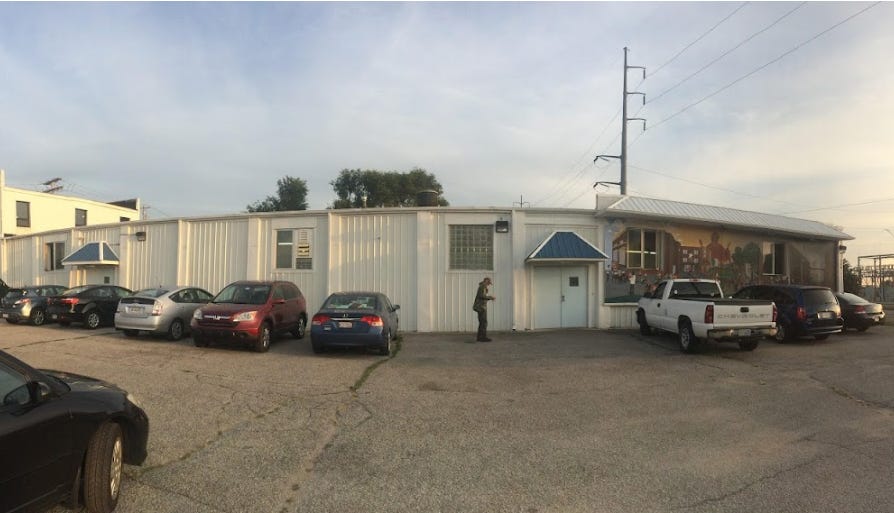
One of the cities (a smaller one) to embrace enthusiastically the Strong Towns’ philosophy several years ago was South Bend IN. I do believe it is really in their drinking water by this point. Have lived there for two years (2020-2022), I was equally struck by what can happen when your town has a cohort of several dozen millennials who simply love their place and are willing to stick around and work to make it stronger.
Even to the point of pretty much eradicating homelessness, which South Bend has succeeded in doing, as this article describes.
The author, Fran Quigley, teaches law and runs the Health and Human Rights Clinic at Indiana University in Indianapolis. For the article, he visited South Bend and their Motels4Now program. Here’s his take on “letting the market do it”:
The Market Will Not Save Us
There is no “business model” for anything connected to Motels4Now and the needs of its residents. For people who are facing enormous challenges and usually limited to a $914 monthly SSI check for their total income, for-profit housing is not the answer.
So Our Lady of the Road, the operator of Motels4Now, is a non-profit organization. The program is largely funded through government dollars, first from the CARES Act and then the American Rescue Plan. The long-term housing placements for most residents are only possible because they have access to Housing Choice Vouchers funded by the federal government. This is a publicly-funded response, and that is how we end our housing crisis.
Our Lady of the Road, as I happen to know, is a Catholic Worker-led day center and a wonderfully radical bunch, no doubt with libertarian (or rather Christian anarchist) instincts somewhat like those of their founder, Dorothy Day. They could be termed “left-wing libertarians”, which some of us believe is the stance Strong Towns should espouse, as opposed to a philosophy endorsed by, say, the Peter Thiels of the world.
The full text of Fran’s article (which appeared in Shelterforce) is here.
I’m embarrassed to admit I’ve put off reading Thomas Merton for a long time, possibly because of some vague notion his writing might seem…cloistered, shall we say. How wrong I was.
I’ve begun with his Conjectures of a Guilty Bystander, a book of journal notes which “add up to a personal version of the world of the 1960s,” “a series of sketches and meditations, some poetic and literary, other historical and even theological…”
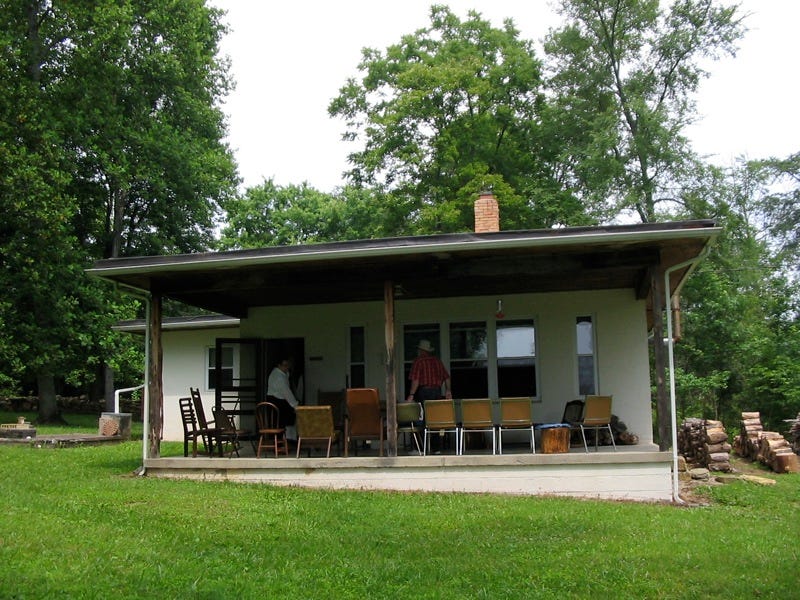
Published late in his life (he died of accidental electrocution in 1968) but drawing on journals going back to 1956, his prose ranges from elegant to searing, ranging much more widely than I expected—entries on technology, racial conflict, the Kennedy assassination, Karl Marx, Zen, Camus, Pope John XXIII, Dietrich Bonhoeffer, Teilhard de Chardin, and the glorious natural beauty of his Kentucky surroundings in his Trappist monastery. (Here’s a tranquil look inside the hermitage in which he did much of his writing.)
Merton had chosen a life of marginality, as he described it, viewing a monk as a marginal person, “no longer an established person with an establish place in society.” He equated this status with that of the displaced person, the refugee, the prisoner. It was one of the gifts of being a guilty bystander in a world some saw in the 1960s as “having a collective nervous breakdown.”
The other gift he got from his outsider status (I’m drawing here on this excellent article) was that of hospitality, specifically the famous monastic hospitality toward travelers, strangers and pilgrims who are taken in, protected, and treated as Christ. You choose this kind of marginality not to escape responsibilities but for the love and healing of the other.
In a letter to a Spanish friend, Merton wrote “God speaks, and God is to be heard, not only on Sinai, not only in my heart, but in the voice of the stranger.”
There’s so much more to say about the book and about Merton. Probably it resonates with me as I try to understand my own new-found condition as a “street Catholic,” a similarly marginal place to be.
See you next time—peace.
I very much agree with the non-partisan approach. I do worry that our institutions and movement groups are too explicitly coding with a "left"/Democratic agenda, especially around identity politics narratives and positions. It will make it even harder to build broad-based solidarity if they continue down this path.
My article about strong towns from last week https://neighborhoodeconomics.org/meet-strong-towns-important-new-partners-in-our-work/